
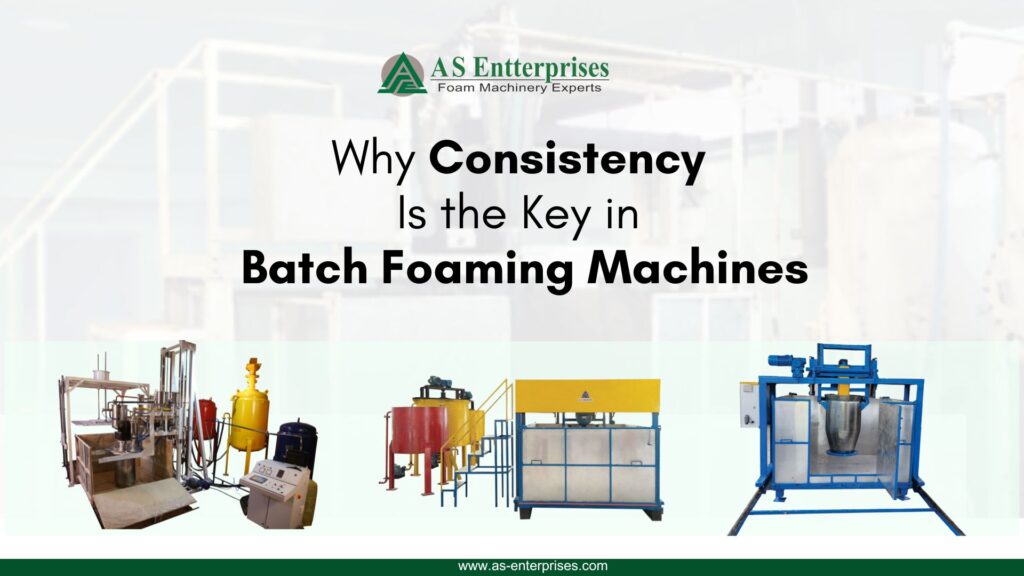
Why Consistency Is the Key in Batch Foaming Machines
In the world of polyurethane foam production, the difference between a market-leading product and a warehouse full of scrap material often comes down to a single word: consistency. For foam manufacturers utilizing a batch foaming machine, the goal is not merely to produce a high-quality block of foam once; it is to produce that exact same quality, density, and cell structure every single time the machine is cycled.
In batch foaming, results are only as good as their repeatability. A single “perfect” batch is an anecdote; a thousand perfect batches is a business. Too often, manufacturers fall into the trap of defining their performance based on their best output. However, in an industry where margins are tight and customer expectations are rigid, one good batch does not define performance—the average variance between your best and worst batches does.
Consistency is the silent engine of growth. It provides manufacturers with the confidence to scale effectively. When you know exactly what your polyurethane foaming machine will produce, you can commit to larger contracts, optimize your chemical procurement, and reduce the massive overhead associated with quality control and waste management.
At A S Entterprises, we believe that consistency is the foundation upon which all successful foam manufacturing is built.
Batch Foaming: A Process Built on Control
Unlike continuous foaming lines (foam plants) that benefit from high levels of steady-state automation, batch foaming demands significantly tighter control. Because the process is cyclical rather than linear, every single start and stop introduces a variable.
The Demand for Tighter Control
In a continuous plant, once the pumps are calibrated and the flow is steady, the system remains relatively stable. In contrast, a batch foaming machine requires the chemicals to be weighed, poured, mixed, and discharged in a discrete sequence. The lack of total automation in traditional batch setups means that the burden of precision falls on the machine’s design and the operator’s discipline.
The Lifecycle of a Foam Block
Every stage of the process—from the temperature of the raw materials in the tanks to the millisecond the mixing blade stops—affects the final foam block.
- The Loading Phase: Even a slight variation of just few gram in the ratio of certain minor chemicals can significantly affect the final density.
- The Mixing Phase:This is the most critical stage. The intensity of the agitation dictates the cell nucleation.
- The Pouring Phase: How the mixture enters the mold determines the uniformity of the rise.
Predictable Output through Controlled Conditions
There is a direct, linear relationship between controlled conditions and predictable output. If the RPM of the mixing motor fluctuates or if the chemical temperature varies by even few degrees, the chemical reaction (exotherm) will change. Achieving a “predictable output” means eliminating these variables one by one until the only thing left is the desired reaction.
What Happens When Consistency Breaks Down
When consistency is absent, the production floor quickly turns into a place of uncertainty. The true cost of inconsistency is often far higher than the cost of the raw materials themselves. Instead of a controlled, predictable process, manufacturers are forced to deal with variations that affect quality, efficiency, and profitability.
Fluctuating Foam Density
If one batch measures 25 kg/m³ and the next reaches 27 kg/m³, the process is no longer under control. Either customer specifications are not being met, or excess chemicals are being used unnecessarily. Both outcomes result in financial loss and reduced production reliability.
Variations in Firmness and Cell Structure
Inconsistent mixing results in non-uniform cell formation within the foam structure, leading to visible defects such as large pinholes and uneven cell distribution. It also causes irregular hardness (ILD) across different areas of the foam block. These variations affect both the appearance and performance of the material. As a result, the foam lacks a smooth, premium finish and becomes difficult to sell in an uncovered or exposed form, as it does not meet the visual and tactile expectations of some applications where smooth texture of surface is essential.
Increased Trimming and Rework
When foam rise is unstable, blocks often develop domed or collapsed tops. This forces manufacturers to trim away large portions of usable material, turning high-value chemicals into low-value scrap and increasing labour and processing costs.
Block Rejection
In severe cases, uncontrolled reactions can cause internal splits or scorching within the foam block. Such defects usually result in complete Block rejection, creating significant financial losses and production delays.
A batch foaming machine that cannot maintain a stable output becomes a liability rather than an asset. Instead of supporting growth, it introduces risk into daily operations and undermines production efficiency.
Core Elements That Define Consistent Batch Foaming
To meet the repeatability standards demanded by modern manufacturing, a polyurethane processing equipment setup must perform consistently and precisely across four critical areas: accurate metering, controlled mixing intensity and RPM with precise mixing timing, and proper chemical conditioning.
Accurate Metering and Dosing
Precise raw material delivery is the starting point of consistent foam production. Polyurethane reactions depend on exact chemical ratios. Even minor deviations can change foam density, firmness, and rise behavior.
Small dosing errors, especially with catalysts, compound into large quality differences. Catalysts control the speed and structure of the foaming reaction. When their dosage fluctuates, the entire reaction profile changes. This can lead to uneven expansion, irregular cell structure, and unstable foam blocks.
Some advanced batch foaming machines are designed with precise metering systems that maintain consistent and controlled flow rates. Accurate and reliable dosing ensures that every batch starts with the same chemical foundation, which is essential for achieving repeatable results. This level of automation is especially useful for users who prefer to avoid manual chemical measurement and are prepared to invest in automated solutions.
Stable Mixing Conditions
Uniform mixing plays a critical role in foam reaction behavior. A strong mixing motor, controlled RPM, and fixed mixing timing ensure that all components are blended evenly before the reaction begins.
When mixing conditions vary, chemical distribution becomes uneven. Some areas of the foam may react faster, while others lag behind. This leads to uneven foam rise and inconsistent block quality.
Controlled agitation allows the reaction to proceed smoothly and predictably. By maintaining the same mixing parameters for every batch, manufacturers can achieve consistent foam structure, density, and performance.
Controlled Reaction Environment
Temperature stability and reaction timing are essential for predictable foam production. Polyurethane reactions are sensitive to environmental conditions. Even small temperature fluctuations can influence how the foam expands and cures.
Guidance from the very first stage of production helps ensure stable conditions. At ASE, customers are advised to prepare and condition chemicals in specially designed chemical rooms before foaming. This helps maintain consistent temperature and humidity levels, reducing environmental variability.
When reaction conditions remain stable, foam properties remain predictable. Controlled environments protect against unexpected changes in foam behavior and support reliable batch-to-batch performance.
BFM-B batch foaming machine → https://www.as-enterprises.com/bfmb-products-detail.html
Machine Design and Its Role in Repeatability
The design of a batch foaming machine plays a critical role in maintaining consistent foam quality. While process parameters such as dosing and mixing are important, the physical construction of the machine itself determines how reliably those parameters can be maintained over time. A well-engineered machine supports repeatability by reducing mechanical variation, stabilising material flow, and ensuring predictable operation across every production cycle.
Why Structural Stability Matters in Batch Machines
Structural stability is the foundation of consistent machine performance. A rigid, well-balanced frame prevents unwanted movement, vibration, and misalignment during operation. These mechanical disturbances, even if minor, can affect mixing efficiency, material flow, and reaction timing.
When a machine maintains its structural integrity under continuous use, critical components such as mixing assemblies, discharge systems, and dosing lines remain properly aligned. This ensures that each batch follows the same mechanical sequence, helping to preserve consistent foam quality over long production periods.
How Semi-Automatic, Robust Design Reduces Batch-to-Batch Variation
A semi-automatic, robust machine design helps standardise the foaming process without introducing unnecessary complexity. Strong mixing motors, controlled RPM settings, and fixed mixing durations ensure that every batch receives the same level of agitation.
When mixing speed and timing remain constant, chemical distribution stays uniform, and the foaming reaction proceeds in a predictable manner. This reduces variations in foam rise, density, and cell structure.
By combining mechanical strength with controlled operating parameters, semi-automatic batch foaming machinesdeliver consistent results over time. This repeatability allows manufacturers to maintain product quality, reduce waste, and operate with greater confidence in their production process.
Reducing Operator Dependency
Manual adjustments across shifts can introduce variability into the foaming process. Different operators may interpret settings differently, leading to inconsistent results.
Making standardised settings and repeatable cycles reduce this dependency. When machines are configured with fixed parameters for dosing, and mixing operators simply follow established procedures. This ensures that foam quality remains consistent regardless of who is operating the machine.
Controlled systems support consistent output even when operator experience levels vary. Clear interfaces, pre-decided programs, and stable mechanical performance help maintain quality across all production shifts.
By reducing reliance on different manual adjustments, foam manufacturers can achieve greater reliability and fewer quality fluctuations.
Consistency and Long-Term Production Planning
Predictable output improves scheduling and order fulfilment. When foam quality is stable, manufacturers can plan production runs with confidence. Orders are completed on time, and inventory levels remain balanced.
Quality assurance becomes easier when parameters remain stable. Inspection processes can focus on confirmation rather than correction. This reduces delays and improves overall efficiency.
Consistent production also reduces uncertainty in material consumption and costing. When chemical usage remains predictable, purchasing and budgeting become more accurate. This helps businesses control expenses and improve profit margins.
A reliable batch foaming machine supports long-term production planning by delivering stable performance over time.
What Manufacturers Should Prioritise When Selecting a Batch Foaming Machine
Selecting the right batch foaming machine is a strategic decision that directly affects production stability, product quality, and long-term operating costs. Manufacturers need equipment that delivers dependable performance across every batch, not just impressive output figures during short-term trials. This is where experienced batch foaming machine manufacturers like ASE play an important role, offering machines designed specifically for consistent and controlled polyurethane processing.
Reliability Over Short-Term Output Gains
High production output can appear attractive, but speed alone does not guarantee reliable results. Machines that prioritise volume over stability often produce inconsistent foam quality, leading to variations in density, firmness, and structure. These inconsistencies increase material waste, rework, and customer complaints.
ASE focuses on building batch foaming machines that deliver stable, repeatable performance rather than chasing short-term output gains. Their machines are engineered to maintain precise dosing, consistent mixing, and predictable reaction behaviour, ensuring that foam quality remains uniform across all batches.
Reliable equipment allows manufacturers to plan production schedules confidently, meet delivery commitments, and maintain consistent product standards over time.
Ease of Calibration and Parameter Monitoring
Consistency depends heavily on how easily machine parameters can be set, monitored, and maintained. Complicated systems that require frequent manual adjustments increase the risk of variation between batches.
ASE designs its batch foaming machines with user-friendly controls and clear parameter visibility. Operators can easily monitor dosing levels, mixing speed, and mixing timing, ensuring that critical settings remain stable throughout production.
This simplified calibration process reduces dependence on highly specialised operators and supports consistent performance across different shifts. When parameters are easy to control, quality becomes easier to maintain.
Support for Maintaining Consistent Performance Year After Year
Long-term consistency depends not only on machine design but also on the level of technical support provided by the manufacturer. Reliable performance requires proper maintenance, access to spare parts, and ongoing operational guidance.
ASE provides long-term support to help manufacturers maintain consistent machine performance over the years. From installation guidance to routine servicing and technical assistance, ASE ensures that its machines continue to deliver stable foam quality throughout their operational life.
This commitment to long-term reliability helps manufacturers protect production efficiency, reduce downtime, and maintain consistent product standards as their business grows.
How A S Entterprises Builds for Consistency
At ASE, consistency is not treated as an optional feature. It is the foundation of every design decision. Each batch foaming machine is developed with a clear focus on delivering stable, repeatable performance in real-world production environments.
Design Philosophy Centred on Stable, Repeatable Operation
The core design philosophy at ASE is built around process stability. Machines are engineered to maintain uniform dosing, consistent mixing, and predictable output of quality across every batch.
Structural strength, balanced components, and precise mechanical movement ensure that the machine behaves the same way over extended periods of use. This stability helps eliminate unwanted variations caused by vibration, misalignment, or uneven material flow.
By prioritising repeatable operation, ASE ensures that customers can rely on their machines to deliver consistent foam quality, regardless of production volume or operating conditions.
Focus on Controlled Processes Rather Than Unnecessary Complexity
Complex systems often introduce more variables into the foaming process. Extra features and overly complicated controls can make machines harder to operate, maintain, and stabilise.
ASE focuses on controlled, streamlined processes that support consistency. Instead of adding unnecessary functions, the emphasis remains on refining core operations such as dosing accuracy, mixing efficiency, and reaction stability.
This approach makes machines easier to operate and maintain while reducing the risk of process variation. Controlled systems allow manufacturers to achieve consistent results without relying on constant manual intervention.
Engineering Decisions Aimed at Long-Term Production Reliability
Every engineering choice at ASE is guided by long-term reliability. Components are selected for durability, mechanical systems are designed for stability, and performance consistency is prioritised over short-term enhancements.
Strong mixing motors, controlled RPM settings, and fixed mixing cycles ensure that foam quality remains stable from batch to batch. Robust machine construction helps maintain alignment and flow consistency even under continuous production conditions.
By focusing on long-term reliability, ASE ensures that its polyurethane processing equipment continues to deliver predictable results year after year. This supports efficient production planning, reduces downtime, and protects product quality.
Conclusion
Consistency directly impacts waste, efficiency, and customer confidence. When foam quality remains stable, manufacturers reduce rework, minimise material loss, and deliver reliable products to their customers.
Batch foaming consistency is not just a technical goal. It is a foundation for sustainable manufacturing. Predictable processes protect profitability by controlling costs, improving efficiency, and strengthening customer relationships.
For businesses using a polyurethane foaming machine, consistency ensures that growth is built on stability rather than uncertainty.
With reliable equipment, controlled processes, and strong engineering support, manufacturers can achieve the repeatability they need to succeed in competitive markets.
ASE remains committed to delivering dependable polyurethane processing equipment that helps customers maintain quality, efficiency, and long-term performance.
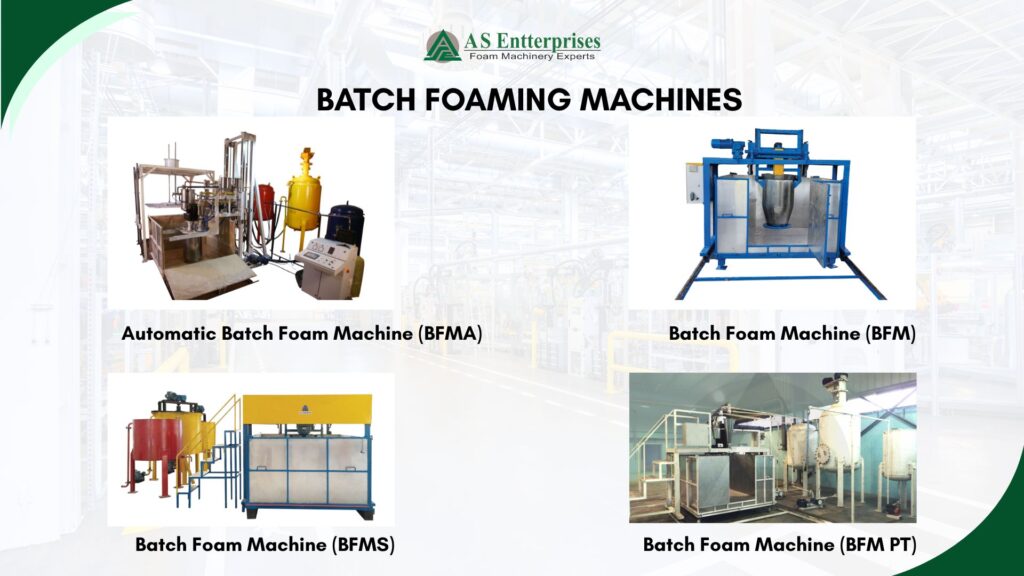
Explore Our Batch Foaming Machines
- Semi-Automatic Batch Foaming Machine (BFM-S)
- BFM-B Batch Foaming Machine
- BFM-PT Batch Foaming Machine
- MFMA Series Foaming Machine